Magnetic resonance imaging (MRI) is one of the most advanced medical diagnostic methods that provides detailed images of internal organs, soft tissues, joints, the spine, the brain, and blood vessels. Today, patients who need an MRI examination often ask: Where can I get a high-quality MRI in Tashkent, and how do I choose the right clinic?
When choosing a medical center, it is important to consider more than just the cost of the examination and the location of the clinic. The quality of MRI diagnostics depends on a combination of factors, including the technical capabilities of the equipment, the correct selection of the examination protocol, the expertise of medical specialists, and the professional interpretation of the obtained images.
In this article, we explain what patients should consider when choosing an MRI clinic in Tashkent.
One of the most important factors in high-quality MRI diagnostics is the equipment used to perform the examination.
Modern MRI systems provide detailed images of various anatomical areas and support specialized examination protocols. Depending on the clinical question, a doctor may recommend MRI of the brain, spine, joints, abdominal organs, pelvic organs, blood vessels, and other areas.
When choosing an MRI clinic, patients should pay attention to the technical characteristics of the MRI system and the diagnostic capabilities of the equipment.
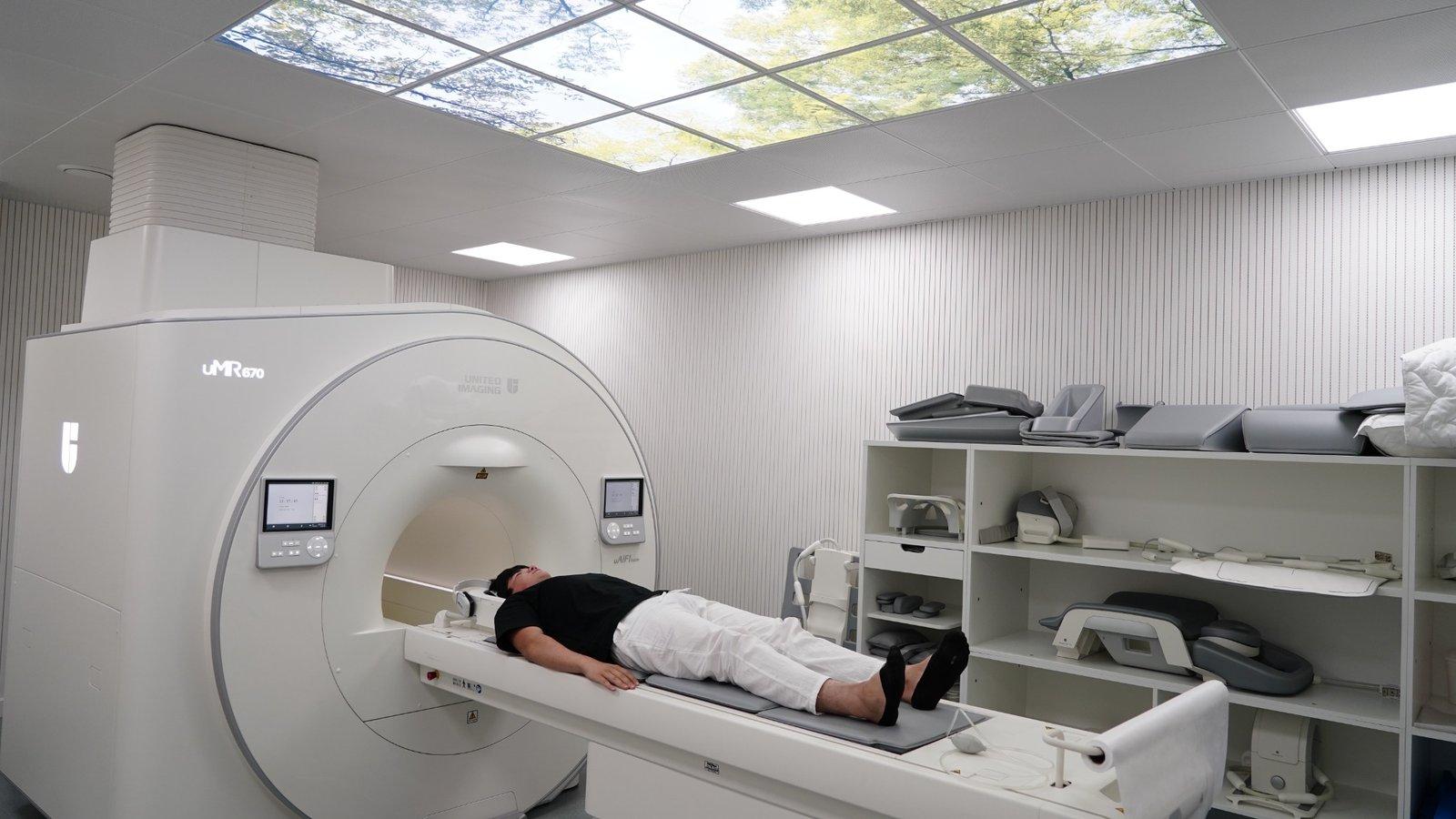
At Kimyo University Hospital, MRI examinations are performed using the uMR 670 system with a magnetic field strength of 1.5 Tesla. The system is designed to perform a wide range of magnetic resonance examinations and provides high-quality diagnostic images.
Magnetic field strength is one of the key characteristics of an MRI system. MRI scanners with a magnetic field strength of 1.5 Tesla are widely used in modern clinical practice to examine various organs and tissues.
However, diagnostic quality is determined not only by the strength of the magnetic field. The correct examination protocol, equipment settings, image quality, and professional interpretation by a specialist are also important factors.
Therefore, when choosing where to have an MRI in Tashkent, it is important to evaluate the clinic as a whole rather than focusing on a single technical characteristic.
Even the most advanced equipment requires a professional approach.
An MRI examination should be performed according to the patient's clinical needs. Depending on the patient's symptoms, suspected diagnosis, and doctor's referral, an appropriate examination protocol is selected.
After the MRI examination, the obtained images are analyzed by a radiologist who evaluates the findings and prepares a medical report.
Therefore, when choosing an MRI clinic in Tashkent, it is important to consider not only the MRI scanner but also the qualifications and experience of the specialists who perform and interpret the examination.
A modern diagnostic center should have the capabilities to perform different types of MRI examinations.
Depending on the clinical indications, a patient may require:
· Brain MRI;
· Spine MRI;
· Cervical spine MRI;
· Thoracic spine MRI;
· Lumbar and lumbosacral spine MRI;
· Joint MRI;
· Abdominal MRI;
· Pelvic MRI;
· Soft tissue MRI;
· MR angiography of blood vessels;
· Contrast-enhanced MRI;
· Specialized MRI protocols.
The ability to undergo different types of examinations at one medical center is convenient for patients and supports a comprehensive diagnostic approach.
In certain clinical situations, a doctor may recommend an MRI examination with contrast enhancement.
Contrast-enhanced MRI may be used to provide a more detailed assessment of certain pathological changes, vascular structures, and other conditions when a standard MRI examination may not provide sufficient diagnostic information.
The decision to use a contrast agent is made by a doctor based on the patient's medical indications and individual health characteristics. Patients should not independently decide whether they need an MRI with or without contrast.
If you have been referred for a contrast-enhanced MRI in Tashkent, it is important to inform the medical staff about any existing medical conditions, previous allergic reactions, and other relevant health information before the examination.
The development of medical technology continues to improve not only MRI equipment but also the methods used to process and reconstruct medical images.
Modern MRI systems may incorporate advanced image reconstruction technologies that help optimize the process of obtaining diagnostic information.
At Kimyo University Hospital, MRI examinations use DeepRecon technology, which is based on artificial intelligence algorithms for image reconstruction.
The technological capabilities of the MRI system are one of the factors that patients should consider when choosing a medical center for MRI diagnostics.
For many patients, undergoing an MRI can cause anxiety because they need to remain inside the MRI scanner during the examination.
For this reason, it is important to consider the conditions in which the examination is performed and how the diagnostic process is organized.
Before the MRI examination, patients receive the necessary instructions from the medical staff. During the procedure, it is important to remain still because movement can affect image quality.
The duration of an MRI examination depends on the body area being examined and the selected protocol. In some cases, the examination may take several minutes, while more complex protocols may require additional time.
If a patient experiences claustrophobia or significant anxiety about the examination, this should be communicated to the medical staff in advance.
The choice of MRI examination depends on the patient's symptoms, suspected diagnosis, and the recommendations of the treating physician.
For example, patients with certain neurological symptoms may be referred for a brain MRI. For persistent back pain, a doctor may recommend an MRI of the relevant section of the spine. In cases of joint disease or injury, an MRI of a specific joint may be required.
It is important to understand that MRI is not always the most appropriate diagnostic method for every medical condition. In some cases, a doctor may recommend CT, ultrasound, X-ray, or another diagnostic examination.
Therefore, before undergoing an examination, it is advisable to consult a medical specialist and determine the most appropriate diagnostic method for your individual situation.
If you are searching for where to get an MRI in Tashkent, it is recommended to consider several factors when choosing a clinic:
· The technical capabilities of the MRI equipment;
· Availability of the required examination protocols;
· Qualifications and experience of the medical specialists;
· Availability of specialized MRI examinations;
· Availability of contrast-enhanced MRI when medically indicated;
· Quality of the diagnostic process;
· Convenient appointment scheduling and access to results;
· A comprehensive approach to medical diagnostics.
Kimyo University Hospital provides MRI examinations using modern equipment and advanced image reconstruction technologies. Patients can undergo different types of magnetic resonance imaging depending on their medical indications.
The cost of an MRI examination is an important factor for patients. However, when choosing a medical center, it is not advisable to focus exclusively on price.
A lower examination cost does not necessarily mean that a particular clinic is the best choice for your diagnostic needs. It is important to consider the equipment, qualifications of specialists, availability of the necessary examination protocols, and the quality of the medical report.
If you are looking for a high-quality MRI in Tashkent, it is recommended to choose a medical center that combines modern diagnostic technologies, qualified specialists, and a comprehensive approach to patient care.
Kimyo University Hospital provides magnetic resonance imaging services in Tashkent.
MRI examinations are performed using the uMR 670 1.5 Tesla system, together with advanced image reconstruction technologies. Depending on medical indications, patients can undergo various types of MRI examinations, including MRI of the brain, spine, joints, internal organs, blood vessels, and other specialized examinations.
If your doctor has recommended an MRI examination, the specialists at the clinic can help determine the appropriate type of examination based on your medical indications.
Looking for where to get an MRI in Tashkent? Learn more about MRI diagnostics at Kimyo University Hospital and schedule your examination.