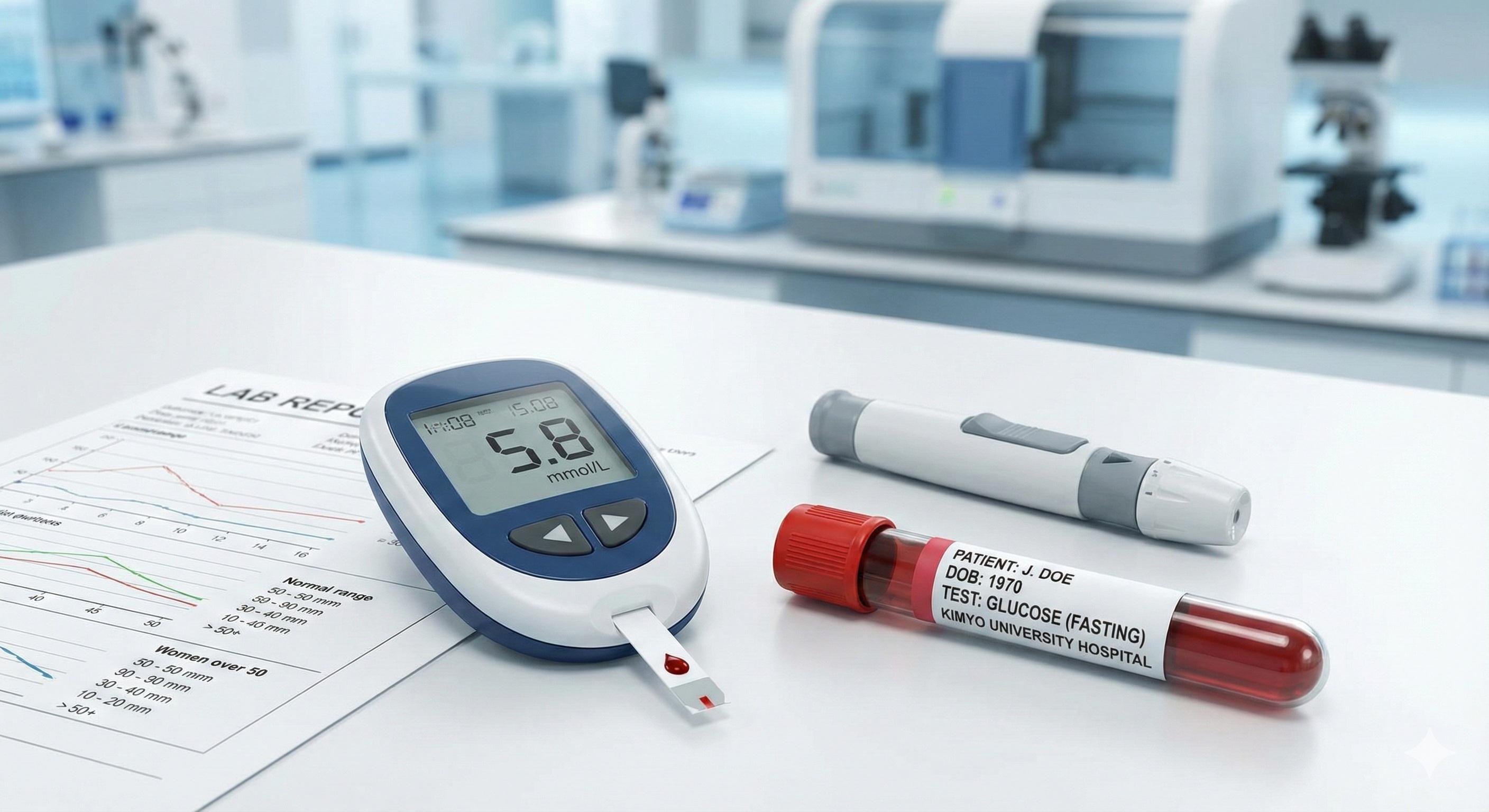
After the age of 50, a woman's body undergoes significant hormonal changes. Menopause affects not only mood or skin condition but also metabolism, specifically cell sensitivity to insulin. It is at this age that the risk of developing Type 2 diabetes increases.
Endocrinologists at Kimyo University Hospital recommend checking glucose levels at least once every six months, even if you have no complaints. In this article, we will analyze what indicators are considered normal for your age and when it is time to sound the alarm.
It is important to understand that norms for capillary blood (from the finger) and venous blood (from the vein) differ slightly. At the Kimyo University Hospital laboratory, we use international diagnostic standards based on venous plasma, as this method is the most accurate.
Below are the benchmarks for interpreting your test results:
Normal: 3.8 – 5.9 mmol/L.
Prediabetes: 6.1 – 6.9 mmol/L.
Diabetes (Requires treatment): 7.0 mmol/L and higher.
Normal: 3.3 – 5.5 mmol/L.
Prediabetes: 5.6 – 6.0 mmol/L.
Diabetes (Requires treatment): 6.1 mmol/L and higher.
Normal: Up to 7.8 mmol/L.
Prediabetes: 7.8 – 11.0 mmol/L.
Diabetes (Requires treatment): 11.1 mmol/L and higher.
Note: With age, the permissible upper limit of the norm shifts slightly upwards. While the ideal for a 30-year-old is up to 5.5 mmol/L, after 50 years, a fasting indicator of 5.8–5.9 mmol/L is considered an acceptable borderline value.
The main reason is the decrease in estrogen production. These hormones protect blood vessels and help the body process glucose. When their levels drop, the pancreas begins to work with an overload.
Additional risk factors:
Excess weight. Abdominal fat (around the waist) is particularly dangerous.
Decreased physical activity.
Medication. Certain blood pressure medications or steroids can raise blood sugar.
Genetics. If parents had diabetes, the risk increases.
Type 2 diabetes often develops asymptomatically (the "silent killer"). However, there are indirect signs that women often overlook, attributing them to age:
Dry mouth and thirst. You want to drink more often than usual, especially at night.
Frequent urination.
Itching skin. Especially in the intimate area or general skin itching without visible rashes.
Poor wound healing. Scratches take weeks to heal.
Weakness and drowsiness after eating.
Deterioration of vision. The image before your eyes becomes blurry.
If your home glucometer shows numbers above normal, do not panic, but do not delay a visit to the doctor. Home devices often have a margin of error.
In our clinic, we conduct comprehensive diagnostics:
Laboratory Glucose Test (Venous blood).
Glycated Hemoglobin (HbA1c). This analysis shows the average sugar level over the last 3 months — the most reliable way to detect hidden diabetes.
Endocrinologist Consultation. The doctor will not just prescribe pills but will select a diet and lifestyle that will help return indicators to normal.
Life only begins at 50, and diabetes is not a verdict, but a reason to treat yourself with more care. Timely control allows you to keep the disease in check and live a full life.
Check your health today.